Thursday, 6 June 2019

Is Texting Ruining the English Language?


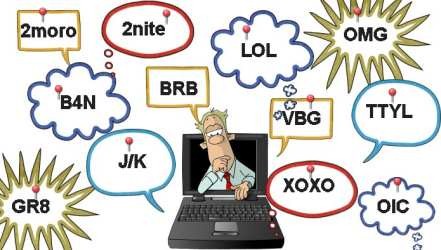
Some people argue that the new technologies and their new words and grammar are ruining the English Language. CMC (Computer Mediated Communication) are now part of our daily lives, believe it or not. Every day, we look down on our phones to check our social media and to send texts and messages, we discuss and talk to other people through chatrooms and social networking sites. In fact, there are 3.84 billion active social media users around the world, which represents 45% of the world’s population and it is likely to continue increasing in the next few years (1).  See? It is part of daily lives of many people. However, does it really change the English Language for the worse? There are many myths about texting and how it destroys the English Language, such as “text messages are full of abbreviations”, “abbreviations are new-fangled”, “kids use textese in essays and exams and are failing as a result” and of course “The English Language is being destroyed”. Those who answered yes to my question would probably agree with these myths, but they are called myths for a reason. Are you ready for the reality now? If that’s the case then keep on reading. Professor David Crystal, a British Linguist, proved in an interview that those were just myths. “Text messages are full of abbreviation”, wrong, in fact only 10% of the words we typed in are abbreviated. “Abbreviations are new-fangled”, well actually they were from 100 years ago. People used to play language games many years ago and used abbreviations. “Kids use textese in essays and exams and are failing as a result”, kids don’t do it all the time. Invigilators were interviewed about this matter and they even stated that “there are the odd ones but it is very unlikely to find essays and exam answers that include abbreviations and text features”. School children were also interviewed and one even said “it’s stupid and we would lose marks if we did that”. Lastly, “the English language is being destroyed”. No. The English Language and changing and evolving, it’s not being destroyed. Ever heard of the saying “change is inevitable”? Well, it also applies to languages, but just because it is changing doesn’t mean it’s being ruined and destroyed. It just means we’re improving and adding more features in our language that can be more efficient when used appropriately, like in texts and social networking sites.

 ____________________________________

(1)  Battisby, A. (2019). The Latest UK Social Media Statistics for 2019. United Kingdom: [online] Avocado Social. Retrieved from https://www.avocadosocial.com/latest-social-media-statistics-and-demographics-for-the-uk-in-2019/


Wednesday, 6 February 2019

Road to Success: Regional Accent or Received Pronunciation?


“It is important that we teach children that, to get on, they must speak Standard English with an RP accent”

I agree with most of what the statement say; that it is important to teach children to speak Standard English because it makes a person look smart and educated. Also, Lindsay John, a writer who mentors young people in London, states that slang/improper English “sounds stupid and uneducated”, and he also said “I want the young people that I mentor to be taken seriously” (1). He has a point. If children and young people get used to speaking Standard English then it would be easy for them to communicate with many different people as they grow older. Also, during job interviews, speaking proper/Standard English is really beneficial as it makes you sound clever and knowledgeable. The last part of the statement, “with an RP accent”, is I think unnecessary. If you grow up in a particular part of a country, it is expected that you’d pick up the accent as you grow older, so you don’t need to change or disguise it because it’s part of who you are. In fact, Esther McVey, Britain’s Secretary of State for Employment, says “young people with strong regional accents should not have to change the way they speak when they are trying to get a job” (2).

However, it is understandable that RP or Received Pronunciation is the easiest accent to understand by many people. Speaking Standard English with an RP accent makes a person seem more educated than speaking Standard English with a regional accent. According to BBC, RP is “considered to be the language of elites, power and royalty” and “RP English is said to sound posh and powerful” (3).  Lindsay John says “under pressure… the young people revert to type. They revert to street slang and therefore it prejudices their application” (1). Therefore, it would be very beneficial for children if they learn to speak Standard English with an RP accent at a young age. The Guardian reveals that “28% of Brits feel discriminated against because of the way they speak” (4).

Overall, I think the most important thing to teach children is to speak Standard English. After all, to be successful in life, it’s how hard they work that matters and not how hard their accent is.


* * *

Appendix 1: Maynard, P. and Green, L. (2013). Should schools ban slang from the classroom? Video debate. United Kingdom: [online] The Guardian. Retrieved from https://www.theguardian.com/commentisfree/video/2013/dec/09/should-schools-ban-slang-video-debate

Appendix 2: Graham, G. (2014). Don’t drop your regional accent just to get a job, employment minister says. United Kingdom: [online] The Telegraph. Retrieved from https://www.telegraph.co.uk/finance/jobs/11165178/Dont-drop-your-regional-accent-just-to-get-a-job-employment-minister-says.html

Appendix 3: Hogenboom, M. (2018). What does your accent say about you? United Kingdom: [online] BBC. Retrieved from http://www.bbc.com/future/story/20180307-what-does-your-accent-say-about-you

Appendix 4: Dathan, M. (2013). Does your accent really hinder your job prospects? United Kingdom: [online] The Guardian. Retrieved from https://www.theguardian.com/careers/accent-hinder-job-prospects

Thursday, 27 September 2018

Swearing is NOT a sign of limited intelligence


You read that damn right I DON'T think swearing decreases your intelligence or makes you less human. Allow me to educate you on taboo language specifically on swearing... because why not?

According to ‘ThoughtCo.’, Taboo language are words and phrases that are considered inappropriate in certain contexts or conditions. Edmund Leach, a social anthropologist, identifies three major categories of taboo language in English which are: dirty words that are linked with sex and excretion (such as “shit”), words that are linked with religion (such as “Jesus”) and words which are used in “animal abuse” (such as “bitch”).

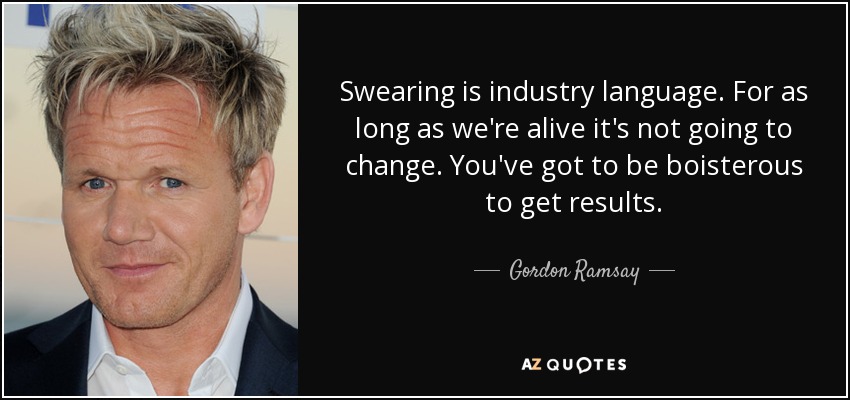
Image result for gordon ramsay gifWe hear people swear everywhere, in public and private settings, in films, on television and even on the radio but why do people swear or use taboo language anyway? Well, swear words intensify the message being said so people mostly swear when they express strong feelings or when they threaten others with their words.

There are thousands and thousands of articles and posts online that agrees that swearing is REALLY good for you. First on the list is ‘The Telegraph’. Believe it or not, swearing can boost up muscle strength and stamina so if you can’t open a stubborn jar just swear at it and voila!

Psychologists actually conducted tests and found out that swearing led to significant improvements in performance. In the tests, volunteers were asked to swear before intense sessions on an exercise bike or squeezing a device that measures hand grip strength. Dr Richard Stephens from the University of Keele stated “…swearing makes people more able to tolerate pain”, “it stimulates the body’s sympathetic nervous system” and “…swearing to make people stronger too, and that is just what we found in these experiments”.

Still don’t believe me? Okay, here’s another one. Swearing is a natural pain relief. Researchers conducted an experiment where they asked volunteers to hold their hand in iced water for as long as they could endure while repeating a swear word and then asked them to do the same again on a separate occasion but this time they repeated a non-swear word and their heart rate was monitored. What they found was that those who swore rated their experience as less painful and their hands were in the water for longer compared to when they repeated a neutral word.

Still need a little kick? Well, Elite Daily listed up 11 reasons why cursing is good for the soul: it makes you feel less pain, it makes you feel stronger, it actually doesn’t mean you’re stupid or ignorant, it serves as a great coping mechanism, it helps you feel much more resilient, it makes you feel so much f*cking better, it’s more engaging while watching television and movies (because it’s so fun seeing famous actors and actresses swear), it helps create close bonds with other people, it’s innate and expressive, it shows you are creative and it helps you emphasise your points.

But why do other people think that swearing is bad or just don’t simply accept it?

Well, if you’re religious swearing is considered as a sin. In Luke 6:45, Jesus said “Your words show what is in your heart”, meaning our words reflect the type of person we already are so swearing makes you look like a bad person. This leads to the next point, swearing damages your reputation. Everyone wants to make a good impression especially when meeting new people but swearing makes you look uneducated and aggressive and it might even restrict opportunities like making new friends. Also, it degrades the English language because it neglects more meaningful words, it’s harsh, it lacks imagination and it doesn’t communicate clearly.

Overall, I think swearing is acceptable as long as you’re old enough to know what they actually mean and why you actually use it (not just 10 year-olds running aroud and swearing because they think it’s “cool”).

Related image


Websites used:


Tuesday, 25 September 2018

Goodbye, Americanisms

What are Americanisms? They are words, expressions or other features that are characteristics of American English. The English language has adopted so many Americanisms throughout the years that it's no longer 'English' English.

I strongly believe that we should no longer accept Americanisms and that we should start using British English again. I know some may say that American English and British English are basically the same but no, it's not the same because we call things and spell words differently which makes our language 'British' English and makes theirs 'American' English. Little things like that make our language different from 'American' English.

Let me ask you this: do you really want our country to lose its own language and identity? No.

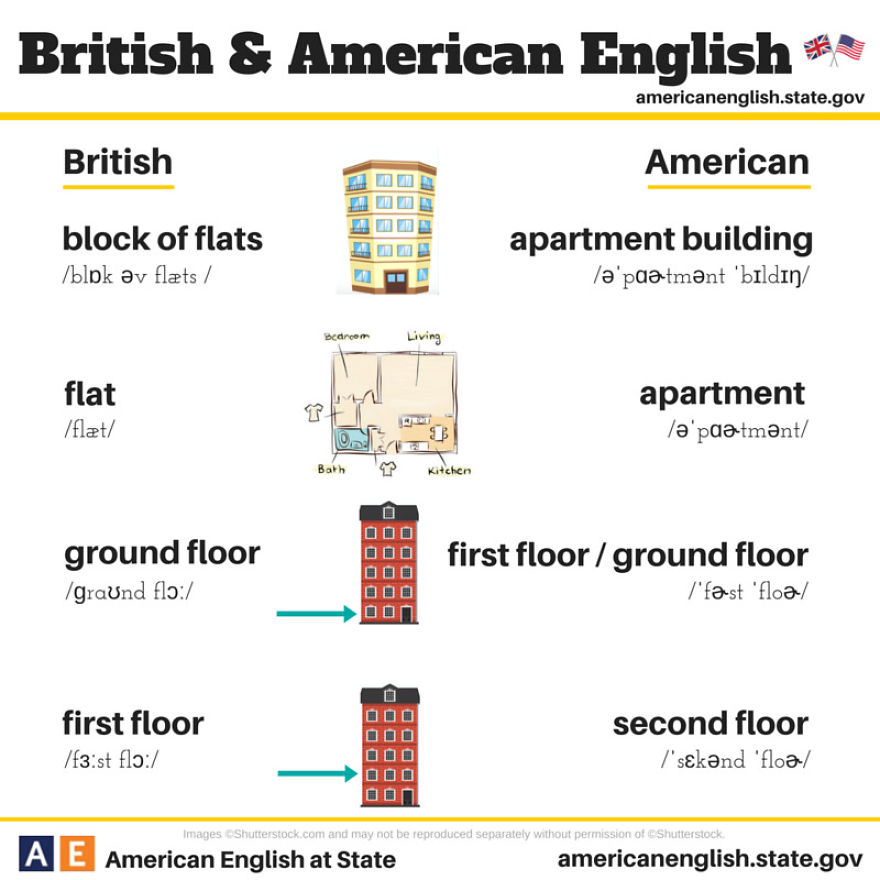
In fact, according to Daily Mail, "Britons are gradually abandoning traditional words for 'Americanisms' like 'awesome'". That may sound nothing at this point but imagine this, five years from now: everyone, I mean EVERYONE, is using words like 'movies', 'sidewalk', 'diaper', 'apartment' and 'vacation'. Also, *annoying* phrases like 'I could care less' and 'Can I get...'. Oh wait, how could I forget? Spelling words differently, for example: 'mom', 'color', 'favorite', apologize' and 'pediatric'. CAN YOU IMAGINE? I CAN'T AND I CERTAINLY DON'T WANT TO.

Every country has their own identity and speaks their own language which makes them unique but if we let Americanisms take over our country and kill our own language then we won't be one of those countries. Next thing we know our country is called 'Great America' or 'United States of Britain' or 'United States of America version 2.0' and I know none of us want that to happen.

Some may say that it's just a language anyway and it won't even change anything but let me tell you that they're wrong. Why? It's because keeping our own language keeps our culture from vanishing and that's already a good reason to use pure British English instead of also using American English. Plus, we're in Britain so it's just logical to use British English.

* * *


Friday, 14 September 2018

Welcome to my Blog!


Welcome! This blog is where i'll be writing my responses to topical issues about the English Language.

The first topic we've explored is 'Americanisms'. We had an enrolment challenge where we had to  find out what language some "British" words originated from and then they were added to the English dictionary.  We also had to listen to a radio programme about American words and make notes about the criticisms and positive thoughts about Americanisms. 


For our first assignment, we had to write our own opinion whether Americanism should be accepted in Britain or not, and this is what my next post is about so you should watch out for that.

See you on my next post!
-Han


**********

Here's a video of David Mitchell talking about Americanisms.